Sarah here...I’ve been thinking a lot lately about the phrase “walking in another person’s shoes” to get a better understanding about the life another individual is living, and trying to better see their perspective and view. Obviously, living here in Ghana for the past 22+ months has given us the opportunity to not only see a different culture, but live it as well. People in our village have commented to us how impressed they are that we do so many of the same things they do: fetch our own water, wash all of our clothes by hand, ride our bikes to market and buy food, go to farm with people, etc. It has given us new perspective on how we view the actions we take in life, how we want to treat each other (as husband and wife) and others, and how slowing down the pace of life is not a bad thing, but actually opens up more time for enjoying the important thing in life: people.
But throughout this whole time, I didn’t consider this phrase literally until recently, when I began noticing people walking past the school and through our village, continuing south, with different items of merchandise on their heads: cloth, jewelry, watches, etc. After the first small group went by, I was curious and asked one of the teachers at my school who they were, where they were going, and what they were doing. He told me that they were roamers from Burkina Faso, who walked (literally!!) from different places in Burkina down through Ghana to sell their products. When I asked him if they actually made decent money from doing this (because it seems like there are tons of different options to buy cloth and jewelry and things of that nature even in our local market), he responded, “Yes! Plenty!”
My first thought was, “Sheesh! That’s a long way to walk to sell stuff that seems like it would be a hard sell!” My second thought was, “Where do they sleep?” The teacher I was talking to said that they sleep out in the bush! Or, if a family is kind enough along the way, they sleep in people’s compounds or extra rooms. But either way, they are walking a distance every day, not knowing necessarily where their bed will be or where they will end up that night. And they still have to eat: so some of the money they are making goes towards putting food in their bellies.
I saw multiple different groups of this sort come through our village, and it made me curious what it would feel like to live that life. What would it feel like to wake up every day and wonder where you would spend that night? What would it feel like if you didn’t know if you would sell anything that day? Would you be able to eat? How many miles would you walk? And eventually, these people would turn around and walk back north to Burkina, where hopefully, their walking would have produced a profit that they could take home to their families.
Jordan and I love the Peace Corps experience that we are living. But it is temporary. We love fetching water (for now), and cooking by headlamp (for now), and biking through the hot sun to get food (for now), and having more than a few sleepless nights because it’s too hot to sleep (for now!). So while we have enjoyed living in and learning from a new culture, at the end of it, we will go home to an “easier” and more comfortable way of life. We will be able to take all of the lessons we have learned, and go back to living in the U.S., with air conditioning when we need it, cold water close at hand, flushing toilets without cockroaches scurrying away from our headlamps and hot showers when we want them. Seeing the different groups of Burkina nomads traveling south was another reminder that life is not always easy, and some ways of life are COMPLETELY different from my own, and the one that I want to live. It’s a reminder that I should be so very grateful for the life I was born into, the opportunities that I have been given, and the ability to be able to choose the life that will come next. Not everyone on this earth is so lucky to have those options, so if you are reading this, take a moment to give thanks for the wonderful life and opportunities you have been given.
In this instance, I have been temporarily walking in someone else’s shoes, and was given the opportunity to see what it might be like to try on another pair. Believe me, it made me thankful for the shoes that I was given!
Sunday, March 24, 2013

You know its hot when...
You know it’s hot when...
- Putting Gold Bond on your heat rash has become as normal as brushing your teeth in the morning and at night
- You lay down in bed at 9:30pm to read for a little bit, and getting up 10 minutes later leaves a human-shaped sweat imprint on your sheets
- You think the temperature is 90oF and it’s actually 117oF
- This new knowledge of the actual temperature makes you feel even more hot
- You feel like your sweat is sweating
- You can’t write anything on paper, because leaving your hand on the paper for longer than a few seconds leaves a sweaty hand print
- You have dreams about laying on ice cubes
- The dinner routine is as follows: set the table, sit down and say a prayer, take off your shirt (and/or shorts in most cases) and eat
- Rolling over in bed causes you to break out in sweat
- Your students point out how much you are sweating...during classtime...
- Your clothes are dry even as you remove them from washing them
- Even Ghanaians are complaining about how hot it is!
- Putting Gold Bond on your heat rash has become as normal as brushing your teeth in the morning and at night
- You lay down in bed at 9:30pm to read for a little bit, and getting up 10 minutes later leaves a human-shaped sweat imprint on your sheets
- You think the temperature is 90oF and it’s actually 117oF
- This new knowledge of the actual temperature makes you feel even more hot
- You feel like your sweat is sweating
- You can’t write anything on paper, because leaving your hand on the paper for longer than a few seconds leaves a sweaty hand print
- You have dreams about laying on ice cubes
- The dinner routine is as follows: set the table, sit down and say a prayer, take off your shirt (and/or shorts in most cases) and eat
- Rolling over in bed causes you to break out in sweat
- Your students point out how much you are sweating...during classtime...
- Your clothes are dry even as you remove them from washing them
- Even Ghanaians are complaining about how hot it is!
Jordan here: I wrote this little blurb for our Ghana newsletter, and thought I would also share it with you. It’s a little of my reflection of probably my biggest project here.
With the help of a SPA grant and food security seed grant, I helped promote and expand a small and unorganized dry season gardening program in my village. We use a dam that was dug but not furnished with proper irrigation canals for proper dry season gardening. So with water pumps and hand-dug channels, water is pushed to different areas and used to irrigate mostly bananas, plantains, and a handful of mangoes. Very few people with access to this irrigation were taking advantage of it to produce nutritious vegetables. This was due to the hard work required to do gardening on a large scale, the cost of fuel for the pump, cost of seeds, and animals destroying anything they can reach. Hence tomatoes, cabbage, okra, green peppers, and carrots are seldom available to my village. If one could find them, they tend to be expensive.
This grant sponsored proper fencing, piping for the water pump, tools, and the materials to build a shade area for tree nursing. This project isn’t a raving success, since very few people have actually come to use the area despite giving access to protected land, a water pump, water tanks, tools, seeds, and cow manure for fertilizer (essentially everything you need to have a dry season garden). However, it is still a success for food security in my village for several reasons. The trickle-down effect of producing 10 basins of tomatoes can be quite impressive: The producers earn a profit from selling to “roamers” (people selling small batches of things around the village). These roamers in turn earn money through the marginal profit made from each small batch sold. Then since there is a greater supply, all buyers can enjoy a tiny dip in price, or perhaps a couple extra tomatoes to entice their business. All of these increase the access pillar by having more money to buy nutritious food. In addition, there is of course an increase in availability since more nutritious food is available right in the village. With less travel, the tomatoes are in better condition when sold maintaining maximum nutritional value. Therefore, utilization is strengthened. Finally, although everyone knows what tomatoes are and how to use them in their food, very few people knew what carrots were and that they are awesome. Vitamin A is a supplement given to children at the baby weighings, usually because they are deficient of this nutrient. Better utilization and education could make a tiny difference in this problem. Our garden strongly promotes the use of moringa in every meal and one woman has started to make money from selling moringa powder grown through this project.
In closing, we’ve learned a lot in the past year about how to make this garden a legitimate business and how to produce greater amounts and more diverse vegetables as well as fruit trees, green leaves, and tea leaves. Plans for the near and far future have been set in motion and the future for this area looks very bright!
With the help of a SPA grant and food security seed grant, I helped promote and expand a small and unorganized dry season gardening program in my village. We use a dam that was dug but not furnished with proper irrigation canals for proper dry season gardening. So with water pumps and hand-dug channels, water is pushed to different areas and used to irrigate mostly bananas, plantains, and a handful of mangoes. Very few people with access to this irrigation were taking advantage of it to produce nutritious vegetables. This was due to the hard work required to do gardening on a large scale, the cost of fuel for the pump, cost of seeds, and animals destroying anything they can reach. Hence tomatoes, cabbage, okra, green peppers, and carrots are seldom available to my village. If one could find them, they tend to be expensive.
This grant sponsored proper fencing, piping for the water pump, tools, and the materials to build a shade area for tree nursing. This project isn’t a raving success, since very few people have actually come to use the area despite giving access to protected land, a water pump, water tanks, tools, seeds, and cow manure for fertilizer (essentially everything you need to have a dry season garden). However, it is still a success for food security in my village for several reasons. The trickle-down effect of producing 10 basins of tomatoes can be quite impressive: The producers earn a profit from selling to “roamers” (people selling small batches of things around the village). These roamers in turn earn money through the marginal profit made from each small batch sold. Then since there is a greater supply, all buyers can enjoy a tiny dip in price, or perhaps a couple extra tomatoes to entice their business. All of these increase the access pillar by having more money to buy nutritious food. In addition, there is of course an increase in availability since more nutritious food is available right in the village. With less travel, the tomatoes are in better condition when sold maintaining maximum nutritional value. Therefore, utilization is strengthened. Finally, although everyone knows what tomatoes are and how to use them in their food, very few people knew what carrots were and that they are awesome. Vitamin A is a supplement given to children at the baby weighings, usually because they are deficient of this nutrient. Better utilization and education could make a tiny difference in this problem. Our garden strongly promotes the use of moringa in every meal and one woman has started to make money from selling moringa powder grown through this project.
In closing, we’ve learned a lot in the past year about how to make this garden a legitimate business and how to produce greater amounts and more diverse vegetables as well as fruit trees, green leaves, and tea leaves. Plans for the near and far future have been set in motion and the future for this area looks very bright!
Saturday, March 9, 2013
More misc
 |
| A really cool praying mantis all white at the garden |

 |
| Fascinated with the camera |
 |
| Lots of wildlife at the garden too! |



Independence Day & Misc
 |
| The JHS girls almost to the marching judges on Ghana Independence Day |
 |
| A couple of the teachers and a student during their marching practice |
 |
| The salute to the judges. Osman, my counterpart is one of the judges |
 |
| Sarah loves new babies. |
 |
| The new rabbit hutch from the inside |
 |
| Such happy rabbits now that they have a cool place to live |
 |
| Muhammed has done very well! Look at his nice new place to raise rabbits! |
 |
| Hikima hanging out with me one day |
 |
| James, a VSO volunteer, and willing victim, asked me to cut his hair one day in Tumu. I made my disclaimer that this was my first time, but he said he didn't care. He seems happy still. Just wait til he actually looks at the pictures ;) |
 |
| From the side, not bad |
 |
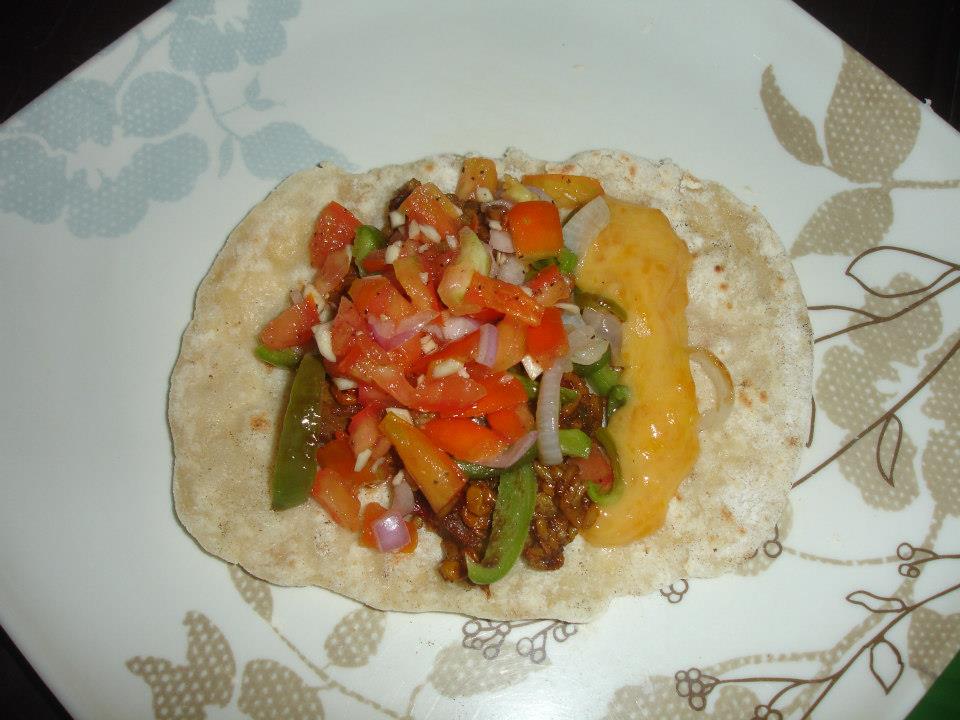
Our french fries and stir fry lunch we made! |
Girls Camp
 |
| A big thank you to all that donated to Camp Opportunity and supported us and the girls. It was a big success! |
 |
| The three girls we brought from our school to Camp Opportunity |
 |
| They decorate their sleeping places |
 |
The girls learn how to make hammocks out of trash! |
 |
| Salah is very interested |

 |
Our group photo with everyone's new tie-dye shirts! Pretty cool. |
 |
I start my session about making shea/moringa soap |
 |
| Looks like a science experiment. The protective clothes are to prevent burns from the caustic soda. |
 |
| We pour the soap |
 |
| I talk about the benefits of moringa |
 |
| The girls learn about the best ways to protect themselves from malaria |
 |
| Our girls are experiencing the freedom of creativity-- for maybe the first time! |
 |
| Sarah does certificate presentations on our closing day. |
 |
| Salah had a great time. |
 | ||
| Perhaps the best quote of the camp: Sarah: So girls, now the camp is over, what was your favorite part? Salah and Rachia: (after some consideration) Madame, everything! |
 |
| Sarah & Melissa |
Friday, March 8, 2013
Camp and Independence Day
Upper West Girls Camp...Success!!
Hey all! Sarah here! Jordan and I had a fun and busy past couple of weeks! From February 24th – March 1st, the Upper West Region PCVs hosted a Girls Camp for 36 JHS girls from across the region in the upper west corner of the region in a city named Lawra. My friend Janette, who is an agriculture volunteer in Lawra, and I organized the camp, and it was a somewhat stressful, but overall FUN week! The four full days of the camp each had a theme, with different presentations happening in the morning (when the day was a little cooler!), fun hands-on activities happening in the afternoon (when the day became too hot to just sit and listen to someone talk) and then a fun evening session . The camp was also one of the first of its kind, because it involved both hearing and non-hearing students. Three students from the Wa School for the Deaf attended the camp, accompanied by their PCV teacher there, and the campers enjoyed learning sign language and interacting with students they normally don’t get a chance to interact with.
Day one was all about education and vocations, and the girls had a good time listening to some female speakers in the morning that had worked hard to get to different positions not normally held by females. In the afternoon, they got to make coil pots out of scrap fabric, learn how to make hammocks out of water satchets (that normally are thrown on the ground and become trash) and go to a local ICT center to learn about computers. We finished off the day with an astronomy night where the girls got to look through one of the PCVs nice telescopes to see the moon! We also had a bonfire and an ‘I Can’t’ Funeral, where they wrote things they thought they couldn’t do on a piece of paper, then threw them into the fire to signify that they indeed could do anything they put their mind to.
Day two consisted of Food Security (a big buzzword and focus in West Africa right now) and Alternative livelihood projects. In the morning they learned about chicken and rabbit rearing, and got a tour of the Ministry of Food and Agriculture animal rearing facilities. In the afternoon they learned how to make moringa soap, have an intro to sewing class, and a second lesson using the computers. They loved being able to perform and watch their fellow campers in the talent show that night, where we had everything from singing and dancing, to juggling and poetry reading – some PCVs even highlighted their talents!
Day three focused on Health Issues. In the morning they learned about HIV/AIDS/STI prevention, and learned how to make a mosquito trap from plastic bottles. In the afternoon they learned about nutrition, tried some yoga, and made ‘Protect Your Dreams’ banners, where they painted about their dreams on a cloth banner, which they could then hang underneath their mosquito net. This signified how sleeping under a mosquito net at night protected them from malaria, and therefore protected the dreams they have for their future. That evening, a couple of PCVs led the girls in a short self-defense presentation while we were trying to get the movie set up (we have all learned as PCVs to be ready for anything to happen, and be prepared to have a backup plan!). The girls thought it was pretty cool though, and it was a good thing for them to learn. The movie was called Emmanual’s Gift, about a Ghanaian born with only one good leg, who bikes across Ghana with only one leg to raise awareness about disabilities. People with disabilities here in Ghana are not given very much support or concern, and many become beggars in major cities because they can do nothing else to raise money. They are sometimes even disposed of at birth if seen to have a physical disability, because people believe that it is bad luck for the family.
The movie was a lead-in to the topics for Day four: Diversity and Disabilities. The morning sessions introduced campers to discussions of what diversity was/how to be tolerant and aware of it, gender roles in Ghana, how they are changing and how they can adapt, and what disabilities mean and how we can be more supportive of people with them. We also played a fun jeopardy game of different things the girls learned during the week. The afternoon finished out with the girls finishing beautiful drawstring bags for their sewing class, trying out different activities to inspire their creativity (Ghanaian students find it very hard to be creative, because they are always so afraid to be different or get something wrong, so this session was wonderful to see them have some fun trying new things and not having to worry about anything being incorrect!), and talking about goal-setting, and journaling about some of the things they learned throughout the week. We also had a fun closing ceremony where the girls were presented with certificates of camp completion, and we took a group photo in the cool tie-dye shirts we had made as campers were arriving the first afternoon.
The final evening we were supposed to have a JAMZ night (dancing to loud music, it’s called Jamz here in Ghana :) ), but again, were reminding about how important it is to be flexible! None of us were expecting rain, because it’s the start of the hot hot hot season and it’s pretty unusual, but not unheard of, to get a big storm. When we saw it off in the distance, we didn’t think anything of it, but it moved quickly! By 5pm, the dust storm hit, blowing wind and dust all around for a good half an hour. But, it was luckily followed by a nice rain! Ghanaians don’t like the rain, because it’s cold...but PCVs love it! So for a good hour while it rained a nice drizzle, the PCVs danced around singing, while all the campers stood under the awning in front of their sleeping place and watched us act like little kids! We taught them the hokey pokey, the chicken dance, the Macarena, and a bunch of fun partner games, which they enjoyed watching us play and cheering for the winners. It was dark by the time our dinner was brought to us, and by then we didn’t know if it would rain again, and didn’t want to be walking to the place in the dark, so we nixed the Jamz night, and instead just hung out and talked, learned more sign language, and relaxed after a long week!
Friday morning we got up, then started to hit the road so we could all get back to our respective villages. Jordan and I, and the six students we had brought from Bugubelle, Tarsor, and Kulfuo, had the farthest to go, so by the time we crawled out of the packed lorry in the hot sun at 2:30pm in Bugubelle, we were beat! After making sure that all the students had the means to get back to their houses safely, we got on our bikes and pedaled home, tired but glad we had such a good week with lots of laughs and few large setbacks. A highlight of the week for me too, was meeting all of Janette’s wonderful friends in Lawra, and I realized how key it was for the success of our camp that she is so integrated into her community; any time we needed anything or something went wrong, she was able to call a specific person to come help us out, no problem. It made me appreciate the time and effort that goes into just making relationships with people in your community (here in Ghana as a PCV, but anywhere really!) because that is key to successful projects but also the key to enjoying our service here. I especially enjoyed becoming friends with a woman named Delphina, whom we affectionately nicknamed ‘Momma D’ for the week, as she made our breakfast and lunch and also was the overnight chaperone in the sleeping hall. So she really was like our Mom for the week! She is a strong woman with a giving heart and beautiful and fun personality, and I was so sad to leave her on Friday morning. I’m lucky she has a daughter that lives in Tumu, our district capitol, so I can go see her when she visits!
The Saturday and Sunday after getting home from the camp were supposed to be spent relaxing, but we were reminded about how good it is to be involved in lots of fun things back in our village – not much time to relax, had a full week of clothes to wash, people to greet, and a dry-season garden to work on!
March 6th: Ghana’s Independence Day!!!
Jordan here: So we may not have shot off fireworks, gorged ourselves on burgers and brats, or went to see the 4th of July parade, but we did get to see some marching! Ghana became an independent nation a little over 50 years ago from Great Britain. The communities gather groups (mostly school kids) in teams that practice marching and attend competitions to prove which is the best team. This was the first year our circuit held their own marching competition. Sarah and I went to watch and support our school as they went up against 4 other groups in each age and gender category. They also played a celebratory friendly football (soccer) match. Like the USA, there were appearances by dignitaries and lots of speeches. Each one had a little history reminder and a charge to the Ghanaian communities to work to improve their lives and the lives of generations to follow. They honoured the flag recited their pledges and national anthem. The radiowaves were talking mostly about the special day and programs also gave little bits of history of this very young nation. Ghana is very proud of its independence and its status as a leading and hopeful country in West Africa. As more history and traditions are created, the Ghanaian Independence Day will continue to grow and be even more celebrated. It was a interesting day to observe and in which to take part.
Hey all! Sarah here! Jordan and I had a fun and busy past couple of weeks! From February 24th – March 1st, the Upper West Region PCVs hosted a Girls Camp for 36 JHS girls from across the region in the upper west corner of the region in a city named Lawra. My friend Janette, who is an agriculture volunteer in Lawra, and I organized the camp, and it was a somewhat stressful, but overall FUN week! The four full days of the camp each had a theme, with different presentations happening in the morning (when the day was a little cooler!), fun hands-on activities happening in the afternoon (when the day became too hot to just sit and listen to someone talk) and then a fun evening session . The camp was also one of the first of its kind, because it involved both hearing and non-hearing students. Three students from the Wa School for the Deaf attended the camp, accompanied by their PCV teacher there, and the campers enjoyed learning sign language and interacting with students they normally don’t get a chance to interact with.
Day one was all about education and vocations, and the girls had a good time listening to some female speakers in the morning that had worked hard to get to different positions not normally held by females. In the afternoon, they got to make coil pots out of scrap fabric, learn how to make hammocks out of water satchets (that normally are thrown on the ground and become trash) and go to a local ICT center to learn about computers. We finished off the day with an astronomy night where the girls got to look through one of the PCVs nice telescopes to see the moon! We also had a bonfire and an ‘I Can’t’ Funeral, where they wrote things they thought they couldn’t do on a piece of paper, then threw them into the fire to signify that they indeed could do anything they put their mind to.
Day two consisted of Food Security (a big buzzword and focus in West Africa right now) and Alternative livelihood projects. In the morning they learned about chicken and rabbit rearing, and got a tour of the Ministry of Food and Agriculture animal rearing facilities. In the afternoon they learned how to make moringa soap, have an intro to sewing class, and a second lesson using the computers. They loved being able to perform and watch their fellow campers in the talent show that night, where we had everything from singing and dancing, to juggling and poetry reading – some PCVs even highlighted their talents!
Day three focused on Health Issues. In the morning they learned about HIV/AIDS/STI prevention, and learned how to make a mosquito trap from plastic bottles. In the afternoon they learned about nutrition, tried some yoga, and made ‘Protect Your Dreams’ banners, where they painted about their dreams on a cloth banner, which they could then hang underneath their mosquito net. This signified how sleeping under a mosquito net at night protected them from malaria, and therefore protected the dreams they have for their future. That evening, a couple of PCVs led the girls in a short self-defense presentation while we were trying to get the movie set up (we have all learned as PCVs to be ready for anything to happen, and be prepared to have a backup plan!). The girls thought it was pretty cool though, and it was a good thing for them to learn. The movie was called Emmanual’s Gift, about a Ghanaian born with only one good leg, who bikes across Ghana with only one leg to raise awareness about disabilities. People with disabilities here in Ghana are not given very much support or concern, and many become beggars in major cities because they can do nothing else to raise money. They are sometimes even disposed of at birth if seen to have a physical disability, because people believe that it is bad luck for the family.
The movie was a lead-in to the topics for Day four: Diversity and Disabilities. The morning sessions introduced campers to discussions of what diversity was/how to be tolerant and aware of it, gender roles in Ghana, how they are changing and how they can adapt, and what disabilities mean and how we can be more supportive of people with them. We also played a fun jeopardy game of different things the girls learned during the week. The afternoon finished out with the girls finishing beautiful drawstring bags for their sewing class, trying out different activities to inspire their creativity (Ghanaian students find it very hard to be creative, because they are always so afraid to be different or get something wrong, so this session was wonderful to see them have some fun trying new things and not having to worry about anything being incorrect!), and talking about goal-setting, and journaling about some of the things they learned throughout the week. We also had a fun closing ceremony where the girls were presented with certificates of camp completion, and we took a group photo in the cool tie-dye shirts we had made as campers were arriving the first afternoon.
The final evening we were supposed to have a JAMZ night (dancing to loud music, it’s called Jamz here in Ghana :) ), but again, were reminding about how important it is to be flexible! None of us were expecting rain, because it’s the start of the hot hot hot season and it’s pretty unusual, but not unheard of, to get a big storm. When we saw it off in the distance, we didn’t think anything of it, but it moved quickly! By 5pm, the dust storm hit, blowing wind and dust all around for a good half an hour. But, it was luckily followed by a nice rain! Ghanaians don’t like the rain, because it’s cold...but PCVs love it! So for a good hour while it rained a nice drizzle, the PCVs danced around singing, while all the campers stood under the awning in front of their sleeping place and watched us act like little kids! We taught them the hokey pokey, the chicken dance, the Macarena, and a bunch of fun partner games, which they enjoyed watching us play and cheering for the winners. It was dark by the time our dinner was brought to us, and by then we didn’t know if it would rain again, and didn’t want to be walking to the place in the dark, so we nixed the Jamz night, and instead just hung out and talked, learned more sign language, and relaxed after a long week!
Friday morning we got up, then started to hit the road so we could all get back to our respective villages. Jordan and I, and the six students we had brought from Bugubelle, Tarsor, and Kulfuo, had the farthest to go, so by the time we crawled out of the packed lorry in the hot sun at 2:30pm in Bugubelle, we were beat! After making sure that all the students had the means to get back to their houses safely, we got on our bikes and pedaled home, tired but glad we had such a good week with lots of laughs and few large setbacks. A highlight of the week for me too, was meeting all of Janette’s wonderful friends in Lawra, and I realized how key it was for the success of our camp that she is so integrated into her community; any time we needed anything or something went wrong, she was able to call a specific person to come help us out, no problem. It made me appreciate the time and effort that goes into just making relationships with people in your community (here in Ghana as a PCV, but anywhere really!) because that is key to successful projects but also the key to enjoying our service here. I especially enjoyed becoming friends with a woman named Delphina, whom we affectionately nicknamed ‘Momma D’ for the week, as she made our breakfast and lunch and also was the overnight chaperone in the sleeping hall. So she really was like our Mom for the week! She is a strong woman with a giving heart and beautiful and fun personality, and I was so sad to leave her on Friday morning. I’m lucky she has a daughter that lives in Tumu, our district capitol, so I can go see her when she visits!
The Saturday and Sunday after getting home from the camp were supposed to be spent relaxing, but we were reminded about how good it is to be involved in lots of fun things back in our village – not much time to relax, had a full week of clothes to wash, people to greet, and a dry-season garden to work on!
March 6th: Ghana’s Independence Day!!!
Jordan here: So we may not have shot off fireworks, gorged ourselves on burgers and brats, or went to see the 4th of July parade, but we did get to see some marching! Ghana became an independent nation a little over 50 years ago from Great Britain. The communities gather groups (mostly school kids) in teams that practice marching and attend competitions to prove which is the best team. This was the first year our circuit held their own marching competition. Sarah and I went to watch and support our school as they went up against 4 other groups in each age and gender category. They also played a celebratory friendly football (soccer) match. Like the USA, there were appearances by dignitaries and lots of speeches. Each one had a little history reminder and a charge to the Ghanaian communities to work to improve their lives and the lives of generations to follow. They honoured the flag recited their pledges and national anthem. The radiowaves were talking mostly about the special day and programs also gave little bits of history of this very young nation. Ghana is very proud of its independence and its status as a leading and hopeful country in West Africa. As more history and traditions are created, the Ghanaian Independence Day will continue to grow and be even more celebrated. It was a interesting day to observe and in which to take part.
Subscribe to:
Posts (Atom)